Danger on Day 1…
Day One Shouldn't Be the Riskiest Day on the Job
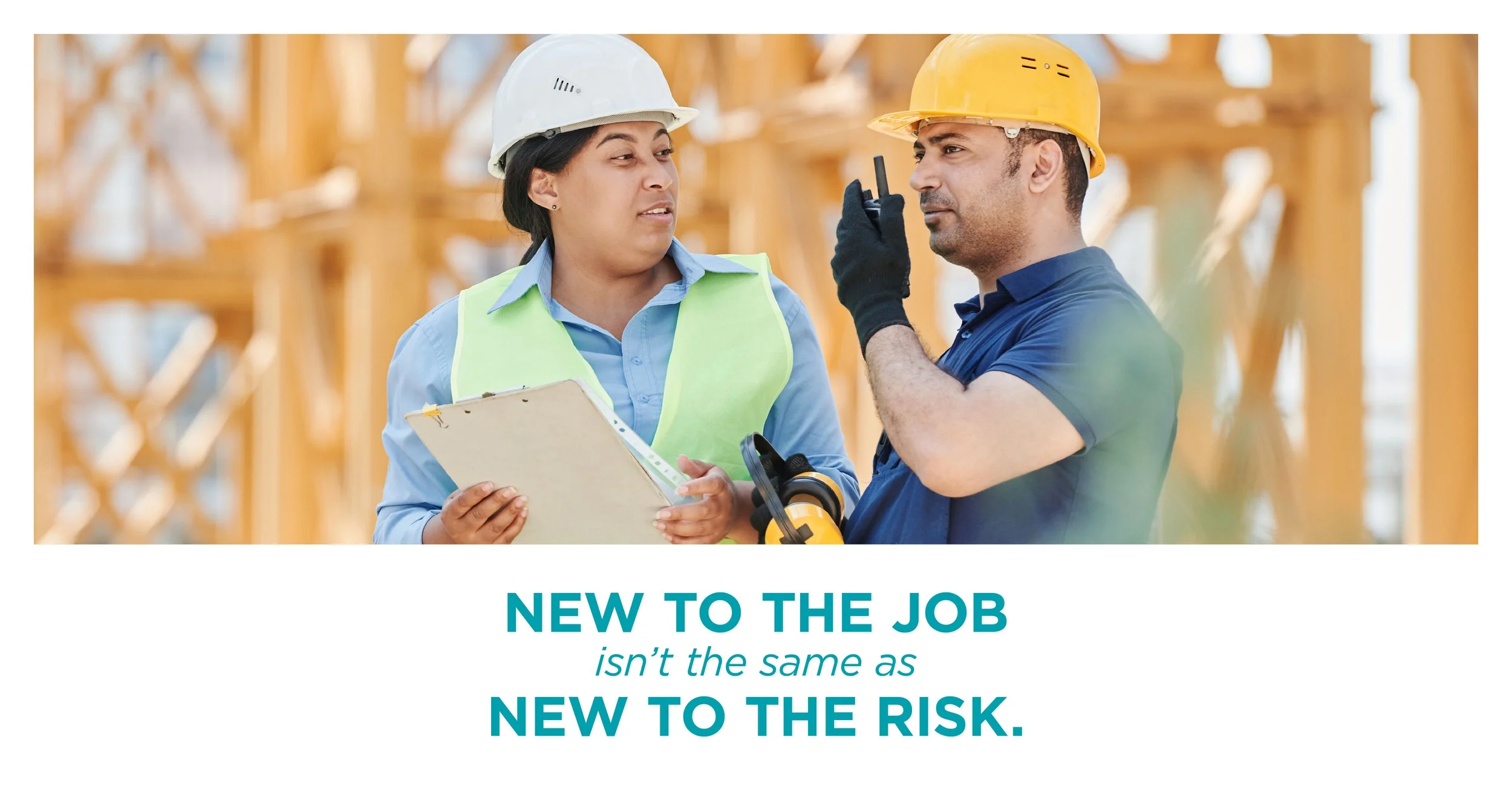
It's a new employee's first week on a construction site. Overalls still stiff, boots not yet broken in, trying hard not to ask too many questions in case it makes them look unprepared. They know where the site office is and where to sign in. What they don't fully know yet is what an unsafe load looks like, when a walkway is actually off-limits, or who to flag it to if something feels wrong. Nobody's being careless here. This is just what day one looks like for almost everyone, and it happens to be one of the most dangerous points in a person's entire career with that employer.
The scale of that risk isn't a guess. The International Labour Organisation puts it plainly: workers aged 15 to 24 experience up to 40% higher rates of non-fatal occupational injury than their older colleagues. In construction specifically, where the daily reality includes working at height, moving machinery, electrical risk and site conditions that shift by the hour, that gap opens up even further.
It's not an old statistic getting recycled either. Nazeer Hoosen, CEO of the Federated Employers Mutual Assurance Company, was making the same point in South African media just this month. His observation lines up with what most site supervisors already sense: many young or new workers arrive with little grounding in basic hazard awareness, unclear on PPE requirements, unsure of emergency procedures, and often not confident enough yet to speak up when something looks off.
None of that comes down to attitude. It comes down to exposure without enough preparation behind it. Supervision that's stretched thin, training that's rushed through in a single session, and a site culture where keeping up with deadlines can quietly outweigh someone's willingness to stop and flag a concern. Layer in genuine uncertainty about their own rights on site, and it's not hard to see why the injury numbers climb fastest in exactly this group.
The fix isn't complicated. It just needs to be deliberate rather than assumed. Structured onboarding before anyone is exposed to real hazards. Visible, active supervision through those first few weeks, not a single induction checklist signed off on day one. A named person new workers can actually go to when they're unsure, rather than figuring it out by watching what everyone else does. Waiting until after an incident to take any of this seriously puts unfair pressure on supervisors and new employees alike, and by then the cost has already been paid in the worst possible way.
For employers, that first week is worth treating as a genuine safety control, not an HR formality to get through. Especially wherever younger or less experienced workers are being placed straight into higher-risk roles.
Experience is built on site. Safety awareness shouldn't have to be. Incon supports induction and training programmes that close this gap before it costs someone.