
Ready for Summer?
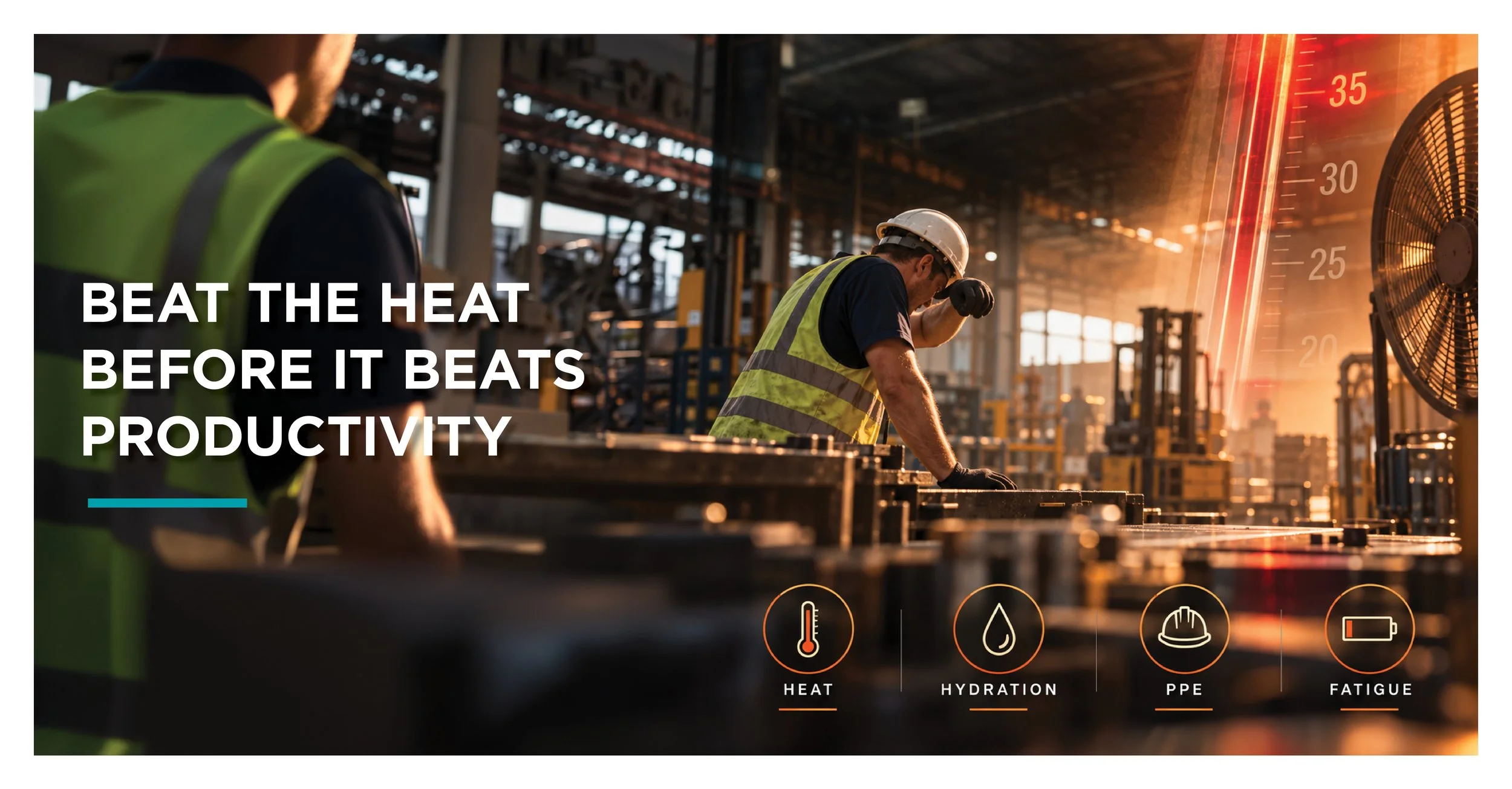
Is Your Workplace Ready for Summer?
For many South African workplaces, summer changes the conditions in which people are expected to do their jobs. Employees who work outdoors are the obvious example, but heat exposure is not limited to direct sunlight. Warehouses, workshops, kitchens, factories and other heat-generating environments can become significantly hotter as temperatures rise.
When physical work, protective clothing or long periods of exposure are added, heat becomes an occupational health consideration rather than simply a question of comfort.
October is a sensible time to review these risks. Waiting until the first heatwave, or until an employee becomes unwell, leaves little room to address gaps in workplace controls.
Heat can contribute to fatigue and affect concentration and physical performance. This becomes particularly important where work involves driving, machinery, heights or other safety-sensitive tasks. The risks will differ between workplaces, which is why employers need to consider the actual conditions their employees experience.
A seasonal review does not have to be complicated. Practical areas to consider include:
Exposure: Which employees, tasks or work areas experience the highest temperatures, and for how long?
Hydration: Is drinking water readily available where employees are actually working?
PPE: Does required protective clothing or equipment increase heat burden during physical work?
Work organisation: Can strenuous tasks, rest periods or working patterns be managed differently during very hot conditions where appropriate?
Awareness: Do employees and supervisors recognise the early signs of heat-related illness and know when to seek assistance?
First aid: Are the people responsible for responding to an incident prepared, and are escalation procedures clear?
These questions should form part of the organisation's broader approach to workplace risk rather than being treated as a generic summer checklist.
Employers should also remember that the workplace may have changed since last summer. New employees, equipment, shifts, production demands or ways of working can all affect how people experience heat.
Seasonal change is therefore a useful prompt to revisit existing risk controls and confirm that they still make sense for the workplace as it operates now.
South African summer is predictable. That gives employers something valuable: time to prepare for it.